
How to Replace a Backflow Preventer?

Updated: Apr 17
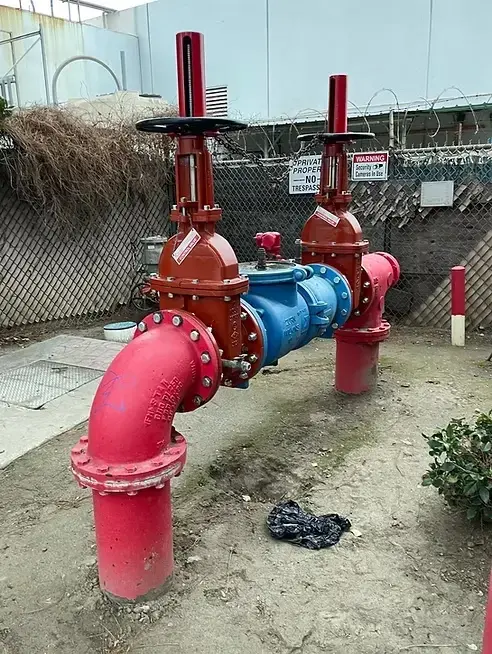
Replacing a backflow preventer involves shutting off the water supply, releasing pressure, removing the old unit by loosening inlet and outlet fittings, inspecting pipes, installing the new unit with proper flow direction and sealant, tightening connections, reopening valves gradually, checking for leaks, purging air, monitoring pressure, and scheduling a certified backflow test if required. The process also involves following safety precautions like shutting off the water supply, releasing pressure, using protective gear, and maintaining a dry workspace to prevent damage and ensure safe handling.
Once prepared, use the required tools and materials, such as wrenches, sealants, union fittings, and a compatible backflow preventer unit, to remove the old device and install the new one through a step-by-step replacement process. Depending on the system, such as sprinkler, faucet, boiler, RPZ, DCVA, or PVB, slight variations in backflow preventer replacement methods are needed to maintain proper operation and compliance.
10 core steps to replace a backflow preventer include:
Step 1: Shut off the main water supply valve
Step 2: Release residual pressure through the test cocks
Step 3: Place a bucket under the assembly to catch water
Step 4: Unscrew union fittings on the inlet side first
Step 5: Unscrew union fittings on the outlet side
Step 6: Remove the old backflow preventer unit from the line
Step 7: Inspect pipe ends for corrosion or thread damage
Step 8: Check the flow direction arrow on the new unit
Step 9: Apply pipe thread sealant to all threaded connections
Step 10: Hand-tighten union fittings on the inlet side first
Step 11: Tighten outlet side fittings with a pipe wrench
Step 12: Slowly open the upstream shut-off valve
Step 13: Check all connections and fittings for leaks
Step 14: Open the downstream shut-off valve gradually
Step 15: Purge air from the assembly through the test cocks
Step 16: Monitor water pressure for 5–10 minutes
Step 17: Schedule a certified backflow test if required by local code
What Are the Things to Consider Before Replacing a Backflow Preventer?

Things to consider before replacing a backflow preventer include the unit's type and size, pipe compatibility, pipe condition, local codes, parts availability, total cost, and whether repair is possible. This evaluation helps determine a compatible, cost-effective, and reliable replacement solution.
Type and size of the backflow preventer unit: Before replacing a backflow preventer, consider the unit type and size, as incorrect sizing affects pressure and flow, while the correct unit ensures proper performance.
Compatibility with existing pipe material and fittings: Check the pipe material, such as PVC, copper, or galvanized steel, and match it with the new unit’s connection type and size. Verify thread type, diameter, and fitting style to ensure alignment. Proper matching of materials and fittings ensures a secure connection and reliable system performance.
Age and condition of the surrounding pipes: Check the age and condition of the surrounding pipes, as weakened or deteriorated pipes may not support proper installation, while inspection helps prevent leaks and system failure.
Local code and permit requirements: Check local code and permit requirements, as they regulate installation and testing, while following them ensures a compliant and safe system operation.
Availability of replacement parts for the existing model: Ensure that parts such as check valves, relief valves, rubber seals, springs, test cocks, and O-rings are available when replacing the backflow preventer, as older units may lack components. Access supports timely repair and avoids full replacement.
Cost of the unit, fittings, and labor: Consider the cost of the unit, fittings, and labor, as expenses vary by type and complexity, while cost evaluation helps plan an efficient replacement.
Whether repair is a viable alternative: Assess repair before backflow preventer replacement, as minor issues may be fixable, and repair can reduce costs and delay full replacement.
What Safety Precautions Should be Followed Before Replacing a Backflow Preventer?
Before replacing a backflow preventer, shut off the main water supply, release pressure, wear safety gear, avoid working on a pressurized system, keep the area dry, do not overtighten fittings, and check local codes before replacement. These precautions help prevent injury, reduce the risk of leaks, ensure proper installation, and maintain system pressure control and long-term reliability.
Shut off the main water supply completely
Release all residual pressure before disconnecting
Wear waterproof gloves and safety glasses
Never work on a pressurized system
Keep the work area dry
Do not overtighten fittings
Check local codes before starting
What Tools and Materials Are Needed to Replace a Backflow Preventer?
To replace a backflow preventer, the required tools include pipe wrenches, adjustable wrenches, channel-lock pliers, utility knives, and thread seal tape for loosening fittings, cutting or preparing connections, and ensuring secure reassembly. Also, have the necessary materials ready, including a properly sized replacement backflow preventer, union fittings, pipe thread sealant, compatible pipe sections, and cleaning supplies such as towels and buckets, to ensure smooth removal and installation. Using the correct tools and materials ensures secure connections, prevents leaks, and maintains proper system performance.
Tools Required for Backflow Preventer Replacement

Essential tools for backflow preventer replacement include pipe wrenches, adjustable wrenches, channel-lock pliers, utility knives, and thread seal tape, which help remove old fittings, prepare connections, and secure the new unit. Using the correct tools ensures safe replacement, prevents leaks, and maintains proper system performance.
Pipe wrench
Channel-lock pliers
Adjustable wrench
Pipe thread sealant
Bucket and towels
Union fittings
Utility knife
Thread seal tape
Materials Required for Backflow Preventer Replacement
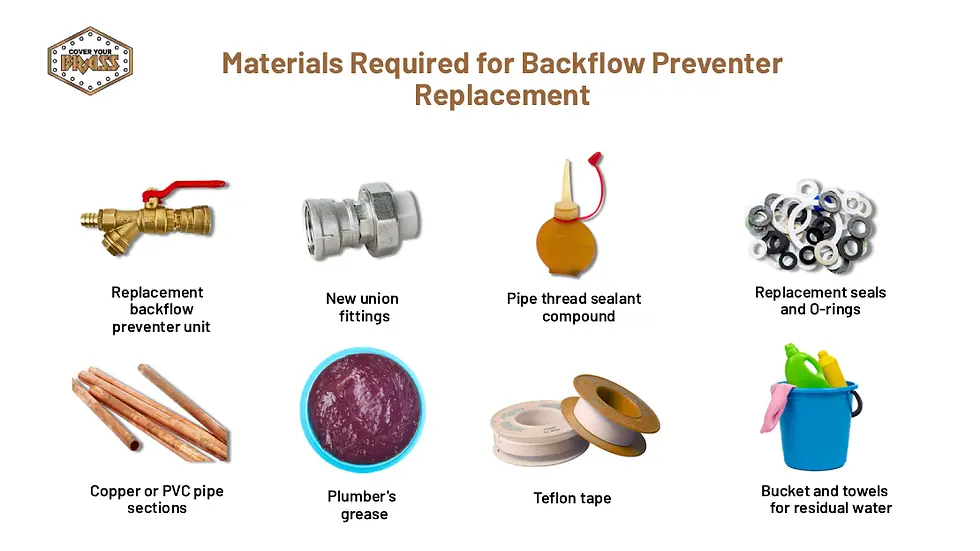
A proper backflow preventer replacement requires materials such as a compatible unit, union fittings, sealant compound, seals, O-rings, pipe sections, plumber’s grease, Teflon tape, and a bucket with towels. Using the correct materials prevents leaks and ensures a secure, easy-to-maintain assembly.
Replacement backflow preventer unit
New union fittings
Pipe thread sealant compound
Replacement seals and O-rings
Copper or PVC pipe sections
Plumber's grease
Teflon tape
Bucket and towels for residual water
How To Replace a Backflow Preventer-Step-by-Step Guide?
To replace a backflow preventer, the process includes shutting off the water supply, releasing pressure, removing the old unit, inspecting and preparing pipe connections, installing the new preventer, securing fittings, restoring water flow, and checking for leaks. Each step ensures the new device fits correctly, maintains proper flow direction, and supports safe and reliable system operation.
Step 1: Shut off the main water supply valve
To begin the backflow preventer replacement, close the primary water supply valve to halt water flow into the system before any disconnection. This isolation ensures a dry workspace and prevents accidental flooding or high-pressure discharge during removal.
Locate the Main Valve: Identify the shut-off valve located upstream of the backflow assembly.
Close Completely: Turn the handle clockwise (or perpendicular to the pipe) to ensure a total cutoff.
Confirm Isolation: Verify that the water supply is inactive by checking a downstream outlet.
Step 2: Release residual pressure through the test cocks
After shutting off the water supply, release any remaining internal pressure by opening the test cocks on the backflow preventer. Test cocks are small, numbered test ports on the sides of the assembly, typically labeled 1 through 4 depending on the device type. This step prevents sudden water discharge when fittings are loosened.
Open in Sequence: Use a flat-head screwdriver or the small built-in levers to open the test cocks on the side of the unit. Start with the highest port to let air in, then work your way down.
Vent Air and Water: Allow the water to drain into your bucket until the flow stops. If your system has pressure gauges, wait until they hit zero.
Safety Check: Relieving this pressure protects the internal spring-loaded check valves from damage and prevents the heavy brass body from shifting suddenly when the unions are disconnected.
Step 3: Place a bucket under the assembly to catch water
Once pressure is relieved, position a bucket under the assembly during backflow preventer replacement to collect residual water from the unit and pipes. This helps maintain a clean and safe workspace.
Minimize Mess: Use a wide, low-profile basin that sits beneath both the inlet and outlet unions to catch the gravity drain from both sides simultaneously.
Protect the Area: Place absorbent rags directly around the base of the pipe to catch drips, keeping the floor dry and slip-free as you work with heavy tools.
Manage the Volume: Be prepared for several liters of water and verify your container size beforehand so you do not have to pause the disconnection to empty it.
Step 4: Unscrew union fittings on the inlet side first
With the workspace prepared, begin the backflow preventer replacement by loosening the inlet-side union fittings using a pipe wrench, as this approach helps control any remaining water flow. This controlled removal reduces the risk of sudden leakage and ensures a safer, more stable disconnection process.
Apply Counter-Torque: Use two wrenches, one to stabilize the supply pipe and the other to turn the union nut. This protects your plumbing from twisting or cracking under the pressure of the wrench.
Loosen Slowly: Rotate the nut counterclockwise until it moves freely. Expect a small amount of residual water to drain into your bucket as the seal breaks.
Step 5: Unscrew union fittings on the outlet side
After disconnecting the inlet side, continue the backflow preventer replacement by loosening the outlet-side union fittings to fully detach the unit from the system.
Support the Device: Firmly hold the brass body of the unit while loosening the final nut to prevent it from dropping unexpectedly and damaging your pipes.
Complete Disconnection: Ensure both union faces are fully separated from the device ports, providing the necessary clearance to lift the unit away.
Step 6: Remove the old backflow preventer unit from the line
Once both connections are free, remove the old backflow preventer from the pipe gap to clear space for installation and allow proper inspection of the pipe ends before fitting the new unit. This ensures a clean and accurate setup for the replacement.
Clear the Area: Move the unit away from the pipes to create sufficient space for proper access, inspection, and cleaning of the pipe and union faces.
Internal Check: Inspect for mineral buildup or rust, as heavy deposits may indicate the need for system flushing.
Step 7: Inspect pipe ends for corrosion or thread damage
With the old unit removed, inspect pipe ends during backflow preventer replacement to ensure they are suitable for the new installation and can form a secure, leak-free connection.
Clean Surfaces: Remove debris, rust, and old sealant using a wire brush to ensure proper sealing.
Verify Integrity: Check for damage, alignment, and thread condition to confirm the pipes can support the new unit.
Step 8: Check the flow direction arrow on the new unit
After preparing the pipe ends for installation, verify the flow direction on the new unit to ensure the backflow preventer replacement functions correctly. It maintains proper water flow through the system.
Confirm Orientation: Align the arrow with water flow to ensure the device functions correctly and allows proper pressure movement.
Avoid Errors: Prevent reverse installation, which can block flow and lead to system malfunction.
Step 9: Apply pipe thread sealant to all threaded connections
Once the new unit is positioned during backflow preventer replacement, apply thread sealant to all threaded joints to ensure a tight, leak-resistant seal under system pressure. This sealing step helps prevent leaks at threaded connections and maintains stable pressure throughout the system.
Proper Direction: Wrap tape clockwise so it tightens securely with the fitting and does not loosen during assembly.
Uniform Coating: Apply the coating evenly to cover the threads fully, ensuring proper sealing and preventing small leaks under pressure.
Step 10: Hand-tighten union fittings on the inlet side first
After sealing, position the new unit and hand-tighten the inlet fittings to ensure proper alignment and prevent thread damage before final tightening. This initial connection is a critical part of a successful backflow preventer replacement, as it holds the weight of the device while you align the rest of the assembly.
Prevent Cross-Threading: Start the union nuts gently by hand to ensure the threads engage perfectly without stripping the softer brass or plastic components.
Initial Alignment: Keep the unit level and centered within the pipe gap to support a balanced installation and avoid putting uneven stress on the gaskets.
Step 11: Tighten outlet side fittings with a pipe wrench
With the unit aligned, tighten outlet fittings to secure the assembly and maintain pressure stability across the system. Using a pipe wrench at this stage ensures that the replacement unit is fully integrated into the plumbing line and can withstand high-pressure surges.
Balanced Torque: Apply firm, even pressure to the union nuts to prevent leaks without over-tightening or damaging the metal threads.
Maintain Seal Integrity: Use a backup wrench to stabilize the pipe, protecting the internal seals and fittings from over-compression or shifting.
Step 12: Slowly open the upstream shut-off valve
Once connections are secured, slowly open the upstream valve to reintroduce water and safely pressurize the system. Introducing water gradually is essential during a backflow preventer replacement to avoid "water hammer," which could damage the new internal check valves.
Prevent Pressure Shock: Open the valve in small increments to avoid sudden mechanical stress on the unit's sensitive internal springs and diaphragms.
Monitor Filling: Observe the steady flow of water into the device and listen for irregular sounds, which could indicate trapped air or a blockage.
Step 13: Check all connections and fittings for leaks
After pressurization, inspect all joints carefully to confirm a secure and leak-free installation under working pressure. This verification ensures that the replacement gaskets and sealants are performing correctly before you restore full water service to the property.
Wipe Test: Use a dry, clean cloth to wipe around each union and fitting; this helps you detect even microscopic leaks that aren't yet visible.
Fix Issues: Shut off the water and relieve pressure to retighten or reseal connections immediately if any moisture or weeping appears.
Step 14: Open the downstream shut-off valve gradually
Once leak-free, open the downstream valve to restore full system flow while maintaining pressure balance throughout the plumbing. This step reintegrates the replacement unit with the rest of the facility's water system without causing plumbing shocks.
Controlled Flow: Open the valve slowly to avoid sudden pressure changes or air bursts in connected fixtures, such as faucets or irrigation heads.
Verify System Response: As you turn the handle, observe the downstream plumbing, such as a running tap or irrigation control, to ensure the water flow transitions smoothly and consistently.
Step 15: Purge air from the assembly through the test cocks
After restoring flow, remove trapped air to stabilize pressure and ensure smooth device operation. Using the test cocks to bleed the system is a standard part of the replacement process; it prevents the unit from vibrating or making "chattering" noises caused by air pockets stuck inside the valve body.
Release Air: Open each test cock briefly with a screwdriver or lever to vent air until a steady, bubble-free stream of water appears.
Close securely: Ensure every test cock is tightly closed after purging to prevent slow drips and to keep the unit ready for its final safety inspection.
Step 16: Monitor water pressure for 5–10 minutes
With the system running, monitor performance for 5–10 minutes to confirm consistent operation and detect any delayed issues. This "soak test" ensures the replacement backflow preventer has stabilized and can handle standard operational demands.
Check Stability: Watch the assembly closely during this 5–10 minute window for gradual pressure drops, new leaks, or unusual vibrations that may occur under full pressure.
Confirm Performance: Ensure the unit remains silent and the flow remains steady, verifying that the internal components have settled correctly after the replacement.
Step 17: Schedule a certified backflow test if required by local code
After confirming proper operation, hire a licensed Backflow Prevention Assembly Tester (BPAT) to perform a certified backflow test after replacement to verify compliance and system safety standards. Most water authorities mandate that any backflow preventer replacement be professionally tested to ensure it effectively protects the public water supply.
Ensure Compliance: Arrange a formal inspection by a licensed backflow professional to verify that the device is functioning as designed.
Keep Records: Maintain all testing documentation and inspection tags for your official records and future reference during annual checks.
How to Replace Different Types of Backflow Preventers?
Replacing different types of backflow preventers involves core steps such as shutting off water, removing the old unit, and installing a new one. The process varies slightly depending on the system, including sprinkler systems, outside faucets, boilers, Reduced Pressure Zone (RPZ) devices, Double Check Valve Assemblies (DCVA), and Pressure Vacuum Breakers (PVB), each requiring specific positioning, pressure control, and compliance considerations.
How to Replace a Sprinkler Backflow Preventer?
Replacing a sprinkler backflow preventer involves removing the old unit and installing a new one to restore proper backflow protection and maintain system performance. This process requires proper removal, sealing, and positioning to ensure leak-free operation and compliance.
Steps to replace a sprinkler backflow preventer are:
Shut off the water supply and relieve pressure through the test cocks before removing the old unit.
Cut or disconnect the existing backflow preventer and clean the pipe ends to ensure a proper fit.
Prepare and install the new unit using Teflon tape, PVC primer, cement, and union fittings for secure connections.
Position the unit at least 12 inches above ground, ensuring the correct flow direction, then slowly restore water and check for leaks.
How to Replace a Backflow Preventer on an Outside Faucet?
Replacing a backflow preventer on an outside faucet (vacuum breaker) involves removing the old unit and installing a new one to prevent back-siphonage and protect the water supply. This process requires careful removal to avoid thread damage and proper fitting to ensure a secure, leak-free connection.
Steps to replace a backflow preventer on an outside faucet are:
Turn off the water supply, then remove the old vacuum breaker by loosening it with pliers or drilling out the set screw if it is locked.
Use penetrating oil or a cutting tool if the unit is stuck, ensuring faucet threads remain undamaged.
Install a new matching vacuum breaker (typically 3/4") by screwing it onto the faucet and tightening securely.
Verify proper fit, restore water flow, and check for leaks to ensure correct operation.
How Do You Replace a Backflow Preventer on a Boiler?
Replacing a backflow preventer on a boiler involves isolating the water supply, removing the old unit, and installing a new one to maintain proper pressure control and prevent contamination. This process requires correct sizing, proper thread sealing, and accurate flow direction to ensure safe and efficient boiler operation.
Steps to replace a backflow preventer on a boiler are:
Turn off the water supply, shut down the boiler, allow it to cool, and relieve pressure by opening a drain valve.
Remove the old preventer with two pipe wrenches, or heat the fittings if soldered, ensuring the pipes remain undamaged.
Clean the pipe threads, remove any old sealant, and apply new Teflon tape or pipe dope to ensure proper sealing.
Install the new unit (e.g., Watts 9D) with correct flow direction, tighten securely, reconnect fittings, restore water slowly, and verify pressure stays within the normal range (12–15 PSI).
How to Replace a Reduced-Pressure Zone (RPZ) Backflow Preventer?
Replacing a Reduced Pressure Zone (RPZ) backflow preventer involves removing the old unit and installing a new one to maintain proper pressure control and contamination protection. This process requires proper clearance, sealing, and alignment to ensure safe operation and code compliance.
Steps to replace an RPZ backflow preventer are:
Shut off the water supply and relieve system pressure before disconnecting the existing RPZ unit.
Remove the old preventer and prepare pipe connections, ensuring proper spacing and clearance (typically 12–30 inches above ground).
Install the new RPZ using union fittings and pipe sealant, aligning it with the correct flow direction.
Restore water gradually, check for leaks, and ensure the system meets local code requirements, preferably with professional testing.
What Is the Process of Replacing a Double Check Valve Assembly (DCVA)?
Replacing a Double Check Valve Assembly (DCVA) involves removing the old unit and installing a new one to maintain proper backflow protection.
Steps to replace a DCVA are:
Shut off the water and relieve pressure before removal.
Remove the old unit and clean pipe connections.
Install the new DCVA with correct flow direction and sealant.
Restore water and check for leaks.
How Do You Replace a Pressure Vacuum Breaker (PVB)?
Replacing a Pressure Vacuum Breaker (PVB) involves removing the old unit and installing a new one to maintain proper backflow protection and system pressure control.
Steps to replace a PVB are:
Shut off the water supply and cut or disconnect the old PVB unit.
Install the new unit using union fittings and apply thread sealant to all connections.
Position the PVB at least 12 inches above the highest sprinkler head, ensuring the correct flow direction.
Restore water gradually and check for leaks to ensure proper operation.
What Are the Common Problems That Can Occur During Backflow Preventer Replacement?
Common problems during backflow preventer replacement result from installation errors, material mismatch, or inadequate testing. These issues can affect system performance, cause leaks, and reduce long-term reliability if not addressed properly.
Incorrect flow direction during installation
Loose or improperly tightened fittings
Debris blocking internal check valves
Poor sealing on threaded connections
Use of an incompatible unit or pipe size
Failure to test pressure after installation
What Are the Common Mistakes to Avoid When Replacing a Backflow Preventer?
Common mistakes to avoid when replacing a backflow preventer include errors in selection, installation, and compliance, which can affect system safety and performance.
Selecting the wrong unit size for the system
Installing the device in the incorrect flow orientation
Skipping required isolation valves
Leaving insufficient clearance for testing and maintenance
Ignoring local code requirements and certifications
How Long Does a Backflow Preventer Last?
A backflow preventer lasts 5-15 years, while high-quality units with regular maintenance can last 20–25 years. Its lifespan depends on factors such as water quality, pressure levels, usage frequency, and environmental exposure. Internal components often require rebuilding every 5–10 years, and units older than 10 years are more likely to fail or need costly repairs. Hard water, frequent use, pressure spikes, and harsh conditions reduce lifespan. RPZ lasts 5–7 years, PVB 6–9 years, DCVA 8–10 years, and AVB 3–5 years. Replace if repair exceeds 50% cost, age exceeds 10–15 years, or damage is visible, with regular testing required.
How Much Does It Cost to Replace a Backflow Preventer?
Replacing a backflow preventer costs between $300 and $1,200 for residential systems, with most homeowners paying around $500–$800, including the unit, labor, and testing. Costs vary by device type, size, and installation complexity, with high-end or commercial replacements ranging from $2,000 to $3,500.
How Much Does a Backflow Preventer Unit Cost?
A backflow preventer unit costs between $100 and $700 for residential parts, depending on the type, size, and material. Installation costs for homeowners range from $130 to $1,200, with commercial units costing $1,000 to $3,500 or more due to higher capacity and complexity.
What Does a Plumber Charge to Replace a Backflow Preventer?
Plumbers charge around $75 to $150 per hour to replace a backflow preventer, with total costs based on labor complexity and system accessibility. For a full project, the cost ranges from $350 to $1,100, while larger units, difficult access, or added testing and compliance requirements can increase the final price.
What Is the Cost of Replacing a Backflow Preventer Yourself?
Replacing a backflow preventer yourself costs between $100 and $600 for parts, depending on the unit size and type, such as PVB or DCVA. This approach can reduce labor costs but may require more time and effort, as well as proper tools and code compliance. If you lack technical knowledge, hiring a professional services helps ensure correct installation and reliable system performance.
What Are the Factors Affecting the Cost to Replace a Backflow Preventer?
The factors affecting the cost to replace a backflow preventer are the type of device, unit size, labor complexity, installation location, permit and testing requirements, and the condition of existing pipes, all of which influence the total replacement cost. These variables can increase or decrease overall expenses depending on system requirements and installation difficulty.
Should You Replace a Backflow Preventer Yourself or Hire a Professional?
You can replace a backflow preventer yourself for simple systems if you have the required tools and basic plumbing knowledge, while complex systems or those requiring testing and code compliance should be handled by a professional.
Replace it yourself if:
The system is simple, such as a sprinkler or faucet unit, and no certification is required.
Hire a professional if:
The system is complex, requires pressure testing, or must meet local plumbing codes, in which case a licensed plumber or a certified Backflow Prevention Assembly Tester (BPAT) ensures safe and accurate installation.
Which is Better: Replacing a Backflow Preventer or Repairing the Existing One?
Repair a backflow preventer if the unit is newer and has minor issues, but choose replacement if the device is old, damaged, or fails testing repeatedly. The key difference lies in long-term reliability versus short-term cost savings, with repairs offering a temporary fix and replacement providing a more durable, compliant solution.
Choose repair when:
The unit is relatively new
Issues are minor, such as worn seals or debris
It can pass testing after servicing.
Choose replacement when:
The unit is aging
Shows visible damage
Fails tests repeatedly
When repair costs exceed 50% of a new unit.


Comments