
How to Test a Backflow Preventer: Step-By-Step Instructions.

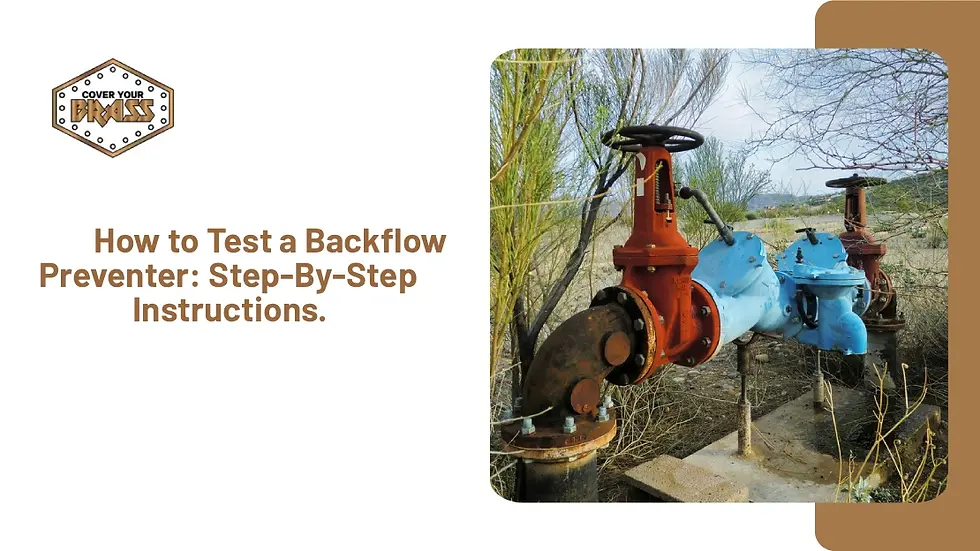
Test a backflow preventer by inspecting the device, setting up a differential pressure test kit, measuring valve performance, verifying system integrity, and recording results to ensure compliance. This structured process ensures each component operates correctly under stable pressure conditions. Because backflow preventers stop contaminated water from reversing into clean supply lines, they are crucial for protecting potable water across systems such as irrigation and fire protection.
Maintain the safety of backflow preventers by conducting regular testing to ensure each device meets required pressure thresholds and complies with local plumbing codes and water authority regulations. This includes verifying the check valve seal, confirming the relief valve response, and ensuring overall system stability. Since test results directly impact safety and compliance, plumbers, water system professionals, and homeowners must understand how each stage contributes to reliable performance and long-term protection of the water system.
12 Steps to Test a Backflow Preventer Properly
Notify the Customer and Inspect the Device for Damage: Inform the customer and inspect the backflow preventer for leaks, corrosion, or faulty components to ensure safe operation and accurate pressure readings.
Record the Manufacturer, Model, and Serial Number: Document device identification details exactly as shown on the plate to maintain compliance and ensure accurate documentation.
Flush the Test Cocks to Clear Debris: Clear debris and trapped air from each test cock to ensure clean flow paths and stable pressure readings.
Connect the Test Kit Hoses to the Appropriate Test Cocks: Attach test kit hoses to the correct ports to ensure accurate pressure zone measurement and prevent invalid results.
Close the Downstream Shut-off Valve to Isolate the System: This isolates the backflow preventer and eliminates pressure interference during testing.
Bleed All Air From the Hoses and Test Kit: Remove trapped air from hoses and equipment to ensure stable, accurate differential pressure readings.
Measure the Pressure Across the First Check Valve: Record the differential pressure across it to verify proper sealing and performance.
Test the Relief Valve Opening Point and Ensure It Meets Safety Standards: Confirm the relief valve opens at ≥2.0 psid to maintain safe pressure conditions and proper RPZ operation.
Check the Second Check Valve for Leaks or Backpressure Issues: Verify the second check valve holds ≥1.0 psid without pressure loss to confirm proper sealing and prevent reverse flow.
Disconnect the Kit and Remove All Adapters: Relieve pressure and remove hoses and adapters safely to prevent discharge, equipment damage, or contamination.
Slowly restore the Water Supply by opening the Shut-off Valves: Reopen shut-off valves gradually to restore pressure safely and prevent water hammer or system shock.
Record the Final Pressure Readings and File the Test Report: Document final readings, confirm pass or fail status, and submit the report to ensure compliance and proper recordkeeping

Step 1: Notify the Customer and Inspect the Device for Damage
Notify the customer or facility manager before starting the backflow preventer test to prevent unexpected disruption to the water supply. Confirm the backflow prevention device type and prepare the correct testing setup to avoid configuration errors, ensuring the system is ready for accurate testing. At the same time, verify that connected systems such as irrigation lines or fire protection assemblies remain stable before proceeding.
After confirming system readiness, thoroughly inspect the backflow preventer for visible damage, including leaks, corrosion, cracked fittings, or faulty valves that could compromise safety and test accuracy. Check test cocks, shut-off valves, and the relief valve to confirm proper operation, and identify early signs of failure such as continuous discharge or restricted movement. Stop testing immediately if any defect is present, as damaged components can distort pressure readings and compromise the safety of potable water.
Step 2: Record the Manufacturer, Model, and Serial Number
Record the manufacturer, model, serial number, and key assembly details exactly as shown on the backflow preventer identification plate to ensure accurate documentation and compliance. This information links the test results to the correct device and ensures proper testing standards are applied.
Locate the Nameplate: Check the brass cover, side, or main body of the assembly for the identification tag, commonly found on devices from manufacturers such as Watts, Febco, Wilkins, or Apollo.
Identify Key Data: Record the manufacturer, model number (e.g., 007, 375, 720A), serial number, and assembly size (e.g., 3/4", 1") exactly as displayed.
Confirm Assembly Type and Location: Identify whether the device is an RPZ, DCVA, or PVB and document its exact installation location within the system.
Record Information Precisely: Enter all details without abbreviations or assumptions to maintain accuracy and traceability.
Verify and Capture Evidence: Double-check all entries, and take clear photos of the tag, the full assembly, and the surrounding area to support records and prevent report rejection.
Step 3: Flush the Test Cocks to Clear Debris
Flush all test cocks one at a time in the correct sequence before connecting the test kit to remove trapped air, dirt, and debris. Clean flow paths are essential because even small particles or air pockets inside the backflow preventer can distort pressure readings and affect test accuracy.
Prepare and Flush the Line: Shut off the water supply if required and flush the line thoroughly to remove debris before proceeding with testing.
Open Each Test Cock Sequentially: Open one test cock at a time and allow water to flow briefly to clear debris and trapped air before moving to the next port.
Ensure Clean Water Flow: Continue flushing until the water runs clear, free of particles and air bursts, confirming the line is fully cleared.
Monitor Flow Consistency: Check for a steady, uninterrupted stream; any fluctuation or sputtering indicates residual air or debris.
Direct Water Away from Equipment: Position the discharge away from gauges and hoses to prevent damage during flushing.
Prevent Contamination of the Test Kit: Ensure all debris is cleared before connecting the equipment, as residual particles can affect readings and damage components.
Proper flushing ensures stable pressure conditions, accurate test results, and protection of both the equipment and the water system.
Step 4: Connect the Test Kit Hoses to the Appropriate Test Cocks
By matching the differential pressure test kit hoses to the correct test cocks, connect the high- and low-side hoses according to the required test sequence to ensure accurate pressure zone measurement. This setup prevents false or reversed readings because each port corresponds to a specific pressure zone within the backflow preventer, and any mismatch can invalidate the entire test.
Match Hoses to Correct Ports: Connect the high- and low-side hoses to the designated test cocks in the testing sequence to ensure accurate pressure readings.
Secure All Connections: Tighten each hose fitting firmly to create a leak-free seal and prevent pressure loss.
Check for Leaks: Inspect each connection point for leakage that could affect gauge accuracy or system stability.
Align Hoses Properly: Keep hoses straight without twisting or straining to maintain consistent pressure transmission.
Prevent Cross-Connection: Ensure hoses are not mixed between ports, as incorrect placement can reverse readings and invalidate results.
Following this proper hose connection ensures accurate measurement, stable gauge response, and reliable backflow preventer test results.
Step 5: Close the Downstream Shut-off Valve to Isolate the System
To isolate the backflow preventer from downstream pressure, locate the correct downstream shut-off valve and prepare it for controlled closure. Turn the valve off gradually to stop downstream flow while maintaining stable internal pressure conditions for accurate testing. This step prevents pressure interference from connected systems, as any downstream demand can distort gauge readings and affect test accuracy.
Confirm Valve Identification: Verify that the correct downstream shut-off valve is selected before operation to avoid affecting irrigation or fire protection systems.
Shut the Valve Slowly: Close the valve gradually to prevent sudden pressure spikes that can affect internal components and gauge stability.
Check for Flow Interruption: Ensure the downstream flow has completely stopped, indicating proper isolation of the device.
Observe Pressure Behavior: Monitor the system to confirm pressure remains steady without unexpected fluctuation.
Resolve Incomplete Isolation: Recheck valve position and system setup if pressure variation or flow persists before proceeding.
Ensuring proper isolation establishes controlled testing conditions and supports accurate evaluation of backflow preventer performance.
Step 6: Bleed All Air From the Hoses and Test Kit
Open the bleed valves and allow water to flow through the hoses to remove all trapped air from the test kit, ensuring stable and accurate pressure readings. This process creates a continuous water column, as trapped air bubbles can cause false failures and unstable gauge response during testing.
Prepare the Test Kit: Close all control valves and confirm the system is ready before starting the air bleeding process.
Connect Hoses Properly: Attach the hoses securely to the appropriate test ports to establish correct flow paths through the system.
Open Bleed Valves in Sequence: Open the bleed valves gradually in a controlled order, allowing water to push out trapped air from each hose and connection.
Flush All Hoses Completely: Continue venting until water flows through every line without interruption and no air bubbles are visible.
Check for Steady Flow: Confirm each hose produces a consistent, uninterrupted stream, indicating complete air removal.
Control Water Discharge: Direct flow away from equipment to prevent splashing and protect gauges from sudden pressure changes.
Close Bleed Valves After Stabilization: Once flow remains steady and pressure stabilizes, close all bleed valves before proceeding.
Removing trapped air ensures accurate gauge response and prepares the system for reliable pressure measurement.
Step 7: Measure the Pressure Across the First Check Valve
Measure the differential pressure across the first check valve using a calibrated test kit to verify valve performance and confirm it maintains the required minimum pressure of 5.0 psid or above for proper sealing. Begin by ensuring the system is isolated, then operate the test kit to allow pressure to register across the first check valve, as accurate setup is critical for valid results.
Zero the Gauge First: Set the differential pressure gauge to zero before starting to ensure accurate measurement.
Establish a Static Condition: Ensure the system is properly isolated so pressure readings are not affected by downstream flow.
Open Valves in Sequence: Operate the test kit control valves in the correct order to apply pressure across the first check valve.
Purge Remaining Air: Bleed any trapped air from the system to prevent false or fluctuating readings.
Allow Gauge Stabilization: Wait for the gauge to settle and display a steady reading before recording the value.
Verify Pressure Threshold: Confirm the reading meets or exceeds the required minimum (e.g., 5.0 psid) to indicate proper valve sealing.
Record Only Stable Results: Document the value only when the reading remains consistent and does not fluctuate.
Accurate measurement of the first check valve ensures reliable performance evaluation and helps identify whether maintenance or repair is required.
Step 8: Test the Relief Valve Opening Point and Ensure It Meets Safety Standards
Gradually operate the test kit to reduce pressure and observe the relief valve opening point, confirming it activates at or above 2.0 psid to meet required safety standards. This process verifies that the RPZ assembly can safely discharge excess pressure and protect the potable water supply from contamination.
Stabilize System Pressure: Ensure the system remains steady after completing check valve testing before starting the relief valve test.
Operate Control Valves Gradually: Adjust the test kit slowly to create a controlled pressure drop without sudden fluctuations.
Monitor Gauge Readings: Observe the pressure gauge closely as the pressure decreases to track changes accurately.
Identify Relief Valve Activation: Watch for the exact moment the relief valve begins to discharge, indicating the opening point.
Record Opening Pressure: Capture the pressure value at the point of initial discharge for accurate evaluation.
Verify Against Standards: Compare the recorded value with required thresholds (e.g., ≥2.0 psid) to determine pass or fail.
Maintain Stable Conditions: Keep hoses free of air and connections secure to prevent distorted readings during testing.
Accurate measurement of the relief valve opening point ensures the system can relieve excess pressure effectively and maintain safe operation.
Step 9: Check the Second Check Valve for Leaks or Backpressure Issues
Create a controlled backpressure condition and measure the second check valve to confirm it holds the required pressure differential ( ≥5.0 psid or local code equivalent) without loss. Proper pressure retention indicates the valve is sealing effectively against reverse flow, while any drop suggests leakage or internal component wear that can compromise system protection.
Prepare the System: Close the downstream shut-off valve to isolate the test zone and establish controlled conditions.
Set Up the Gauge: Connect the differential pressure gauge to the appropriate test ports and ensure all connections are secure.
Bleed All Air: Open test points and purge any trapped air from the hoses to ensure stable, accurate readings.
Apply Test Pressure: Gradually operate the test kit to apply pressure across the second check valve and observe the system's response.
Monitor Pressure Stability: Confirm the gauge reading remains steady above the required threshold, indicating proper valve sealing.
Identify Leakage or Failure: Watch for a pressure drop, fluctuating readings, or discharge behavior, which may indicate leakage or worn internal components.
Control Valve Operation: Adjust valves slowly to prevent pressure disturbance and ensure accurate measurement.
Consistent pressure retention confirms the second check valve is holding against backpressure and effectively protecting the water system.
Step 10: Disconnect the Kit and Remove All Adapters
Relieve all internal pressure and disconnect the test kit in a controlled sequence to prevent sudden discharge, water spillage, or equipment damage. Stable pressure release ensures safe handling conditions, while any remaining pressure can cause uncontrolled discharge and risk damage to components or inaccurate system restoration.
Close All Valves First: Shut all test cocks and gauge control valves to stop water flow before disconnection.
Release Trapped Pressure: Open bleed points on the test kit to safely discharge remaining pressure until the gauge reads zero.
Verify Safe Conditions: Confirm the system is fully depressurized and stable before handling hoses or fittings.
Disconnect Hoses Sequentially: Remove hoses one at a time to maintain control and prevent a sudden release of water.
Remove Adapter Fittings Carefully: Unscrew adapters without damaging threads or disturbing the assembly.
Restore System Pressure Gradually: Slowly reopen the shut-off valve to restore normal system operation.
Secure and Inspect Components: Cap all test cocks tightly, check fittings for debris, and store equipment properly.
Controlled disconnection protects equipment, prevents contamination, and ensures safe system restoration.
Step 11: Slowly Restore the Water Supply by Opening the Shut-off Valves
Restore the water supply by gradually opening the shut-off valves in the correct sequence to ensure controlled re-pressurization and prevent pressure surges, water hammer, or system shock. Begin by slightly opening the upstream shut-off valve to reintroduce water into the backflow preventer assembly, then progressively open the downstream valve to restore full flow. Monitor the pressure gauge closely as pressure builds, and observe components such as the relief valve, check valves, and internal seals for stable operation without fluctuation or discharge.
Maintain slow, deliberate valve movement to protect internal components such as check valve springs and diaphragms from sudden stress. Verify consistent pressure stabilization across the system, check all test cocks and fittings for leaks, and confirm normal flow conditions before fully opening valves. Controlled restoration ensures the assembly operates within safe pressure limits and maintains the integrity of the potable water system
Step 12: Record the Final Pressure Readings and File the Test Report
Record all final pressure readings accurately using the differential pressure gauge and confirm the pass or fail status before completing and filing the backflow test report. Capture stable readings for each component, including check valves (≥1.0 psid) and the relief valve opening point (commonly ≥2.0 psid for RPZ assemblies), ensuring the gauge is steady and free of fluctuations before documenting the values. Compare these readings against local water authority requirements, ASSE standards, or USC guidelines to determine compliance, as these thresholds define whether the device remains in service or requires repair.
Once verified, document the complete device details, including assembly type (RPZ, DCVA, PVB, SVB), manufacturer, serial number, test date, and tester certification number, ensuring all entries are accurate and traceable. Submit the report to the appropriate authority and retain a copy, as proper documentation supports audits, regulatory compliance, and long-term system safety.
What Tools and Equipment Do You Need to Test a Backflow Preventer?
Necessary tools and equipment for backflow preventer testing include a calibrated differential pressure test kit, test cock adapters, color-coded hoses, bleed valves, a static pressure gauge, a discharge hose, a curb key, a wrench, and filters to ensure accurate pressure measurement and compliance. These tools allow proper connection to the backflow prevention device, enable precise pressure readings across valves, and support controlled water flow during testing. Using calibrated equipment ensures reliable results, prevents system damage, and helps meet regulatory requirements for valid backflow preventer test reports.
9 Essential Tools for Backflow Preventer Testing
Calibrated Differential Pressure Test Kit: Measures pressure differences across check valves to verify performance and ensure accurate, compliant backflow testing.
Test Cock Adapters and Fittings: Create secure, leak-free connections between test cocks and the test kit to ensure accurate pressure transmission.
High- and Low-Side Color-Coded Hoses: Transfer pressure signals while maintaining correct high- and low-side separation for precise differential readings.
Bleed Valves and Needle Valves: Remove trapped air and control flow rate to stabilize pressure conditions and prevent inaccurate gauge readings.
Static Pressure Gauge: Measures baseline system pressure to support comparison with differential readings during backflow testing.
Relief Discharge Hose: Directs discharged water safely away from the device, maintaining a clean and controlled testing environment.
Meter Box or Curb Key: Provides access to underground shut-off valves for controlling the water supply during test setup and shutdown.
Adjustable Wrench: Secures and loosens fittings and valves to ensure tight, leak-free connections throughout the testing process.
90-Micron Inline Filters: Captures fine debris before it reaches the gauge, protecting equipment and maintaining measurement accuracy.

Calibrated Differential Pressure Test Kit
A calibrated differential pressure test kit, comprising an analog or digital gauge (0–15 psid), a 3-valve or 5-valve manifold, and color-coded hoses, measures the pressure difference across check valves in a backflow preventer. It serves as the primary instrument for accurate pressure measurement and supports compliance with backflow preventer testing standards.
Test Cock Adapters and Fittings
Secure, properly aligned connections between the backflow preventer test cocks and the test kit rely on the correct use of adapters and fittings to maintain a leak-free seal throughout testing. By accommodating different test cock sizes and configurations, these components ensure accurate pressure transmission to the gauge and support consistent, reliable backflow preventer test results.
High- and Low-Side Color-Coded Hoses
Color-coded hoses transmit pressure from the backflow preventer test cocks to the differential pressure test kit, maintaining clear separation between the high- and low-pressure sides. They support accurate pressure-differential measurement by preserving proper pressure-zone identification during backflow-preventer testing.
Bleed Valves and Needle Valves
Within the differential pressure test kit, bleed valves and needle valves serve distinct but equally important roles in supporting accurate backflow preventer testing. Bleed valves discharge trapped air from hoses and connections to eliminate false readings, while needle valves control the flow rate within the system, together ensuring stable and reliable pressure conditions throughout the testing process.
Static Pressure Gauge
A static pressure gauge measures the water pressure in the system when no flow is present, providing a baseline reading for backflow preventer testing. It supports pressure assessment within the water supply and enables comparison with differential pressure readings when evaluating the backflow prevention device.
Relief Discharge Hose
Designed to handle water expelled from the relief valve during backflow preventer testing, the relief discharge hose directs flow away from the device to a controlled discharge location. Maintaining a clear and dedicated discharge path keeps the testing environment safe and supports an organized, uninterrupted testing setup.
Meter Box or Curb Key
Designed to reach below-ground shut-off valves within meter boxes and curb stops, the curb key gives the technician direct control over the upstream water supply during backflow preventer testing. Its purpose is strictly access and control at the main supply point, making it a fundamental tool for managing water flow before testing begins.
Adjustable Wrench
An adjustable wrench secures and loosens fittings, adapters, and shut-off valves during backflow preventer testing, providing the grip and torque needed to create leak-free connections throughout the test setup. Its adaptable jaw width accommodates various fitting sizes found across different backflow prevention assemblies and testing configurations.
90-Micron Inline Filters
Positioned within the test kit hose connections, 90-micron inline filters capture fine debris and sediment from the water supply before it reaches the differential pressure gauge or internal valve components. By protecting sensitive equipment from particle damage, these filters maintain measurement accuracy and support the long-term reliability of the test kit during backflow preventer testing.
Does Backflow Preventer Testing Differ by Type?
Yes, backflow preventer testing varies by device type because each assembly operates under a distinct pressure-control design that requires a specific testing approach. Each backflow prevention device interacts differently with the water system, which affects how pressure is measured, how valves respond, and how results are evaluated during the test. Testing methods vary across key assemblies such as Reduced Pressure Zone (RPZ), Double Check Valve Assembly (DCVA), Pressure Vacuum Breaker (PVB), and Spill-Resistant Vacuum Breaker (SVB), as each uses a unique internal configuration and pressure behavior that requires adjustments in test setup, sequence, and evaluation criteria.
How to Test a Reduced-Pressure Zone Assembly (RPZ)?
Test a Reduced Pressure Zone (RPZ) assembly by verifying differential pressure across both check valves and confirming the relief valve opening point, as proper performance depends on maintaining a stable reduced pressure zone. You should know that RPZ testing differs from DCVA or PVB testing because it requires evaluating both the check valve pressure and the active relief valve discharge, with a minimum differential of about 5.0 psi across the first check valve, per local standards.
Stabilize and isolate the RPZ assembly to establish controlled pressure conditions and eliminate downstream influence.
Zero and confirm gauge calibration before measuring to ensure accurate differential pressure readings.
Measure the first-check valve differential and verify that it meets the required minimum pressure threshold for proper sealing.
Observe the relief valve opening point and confirm it discharges at the correct pressure without continuous leakage.
Measure the second check valve differential to ensure it holds against backpressure and maintains system protection.
Watch for pressure stability and drift to identify trapped air, loose fittings, or setup errors that affect accuracy.
Record only stable and consistent readings to ensure correct pass or fail evaluation and compliance reporting.
How to Test a Double Check Valve Assembly (DCVA)?
Test a Double Check Valve Assembly (DCVA) by measuring the static differential pressure across both check valves to confirm each valve holds at least 1.0 psid and remains drip-tight in the direction of flow. This ensures no leakage occurs under backflow conditions and verifies proper valve sealing within the system. Unlike RPZ assemblies, DCVA testing focuses only on check valve tightness and shut-off integrity, since it does not include a relief valve. As a result, the test confirms that each check valve maintains the required pressure drop and effectively prevents reverse flow within the water system.
Stabilize and isolate the DCVA assembly to create controlled conditions with no downstream pressure influence.
Verify the static pressure drop across each check valve using a differential pressure test kit, ensuring readings meet or exceed 1.0 psid.
Check that each valve remains drip-tight under normal flow conditions to confirm proper sealing performance.
Observe gauge stability before recording readings, as stable pressure indicates accurate measurement and no internal leakage.
Confirm no pressure loss under simulated backflow conditions, since proper performance requires both check valves to hold tight in reverse flow scenarios.
How to Test a Pressure Vacuum Breaker Assembly (PVB)?
Test a Pressure Vacuum Breaker (PVB) assembly by measuring the air inlet valve’s initial opening point at ≥1.0 psid and confirming the check valve remains drip-tight at ≥1.0 psid, since PVB testing is driven by vacuum response and atmospheric protection—not multi-valve pressure balancing. Unlike RPZ and DCVA assemblies that rely on sustained differential pressure across check valves, a PVB operates by introducing air into the system during back-siphonage. This makes the air inlet valve the primary control component, and its response under pressure loss becomes the key performance indicator in backflow prevention.
Establish controlled internal pressure within the PVB assembly to create a stable baseline for accurate differential pressure measurement.
Measure the air inlet valve’s initial opening point using a differential pressure gauge, ensuring it activates at or above 1.0 psid above atmospheric pressure.
Observe the transition from initial opening to full opening, confirming the air inlet valve continues to open completely as water drains from the assembly body.
Verify the check valve maintains a minimum of 1.0 psid, ensuring it remains drip-tight in the normal direction of flow under static conditions.
Confirm stable gauge behavior and no delayed valve response, as accurate PVB performance depends on immediate air inlet activation and consistent pressure integrity.
How to Test a Spill-Resistant Vacuum Breaker (SVB)?
Test a Spill-Resistant Vacuum Breaker (SVB) by measuring the check valve pressure drop and determining the air inlet valve opening point at ≥1.0 psid to confirm both components meet the required performance criteria. This ensures the assembly maintains proper sealing and activates correctly under pressure loss conditions. Unlike a PVB, an SVB operates without visible discharge, so testing relies on internal pressure behavior, stable gauge readings, and controlled activation of the air inlet within a closed system. As a result, accurate gauge positioning becomes critical, since even slight elevation differences can directly affect the accuracy of readings.
Stabilize and isolate the SVB assembly to create a controlled internal pressure condition with downstream pressure reduced to atmospheric.
Measure the static pressure drop across the check valve using a differential pressure gauge, ensuring it remains ≥1.0 psid and that the valve remains drip-tight in the direction of flow.
Maintain the test gauge at the vent outlet elevation throughout testing, as elevation consistency is required for valid pressure readings.
Observe when the flow stops and the gauge stabilizes, as this indicates the correct moment to record the check valve pressure drop.
Gradually reduce internal pressure to trigger the air inlet valve, using the same elevated gauge position.
Measure the initial opening point of the air inlet valve to confirm it activates at ≥1.0 psid above atmospheric pressure.
Verify the air inlet valve continues to open fully as the assembly drains, confirming proper vacuum relief without external discharge.
How Long Does a Backflow Preventer Test Take?
A backflow preventer test takes 20 to 40 minutes for a single, accessible device in good condition, while more complex systems or multiple assemblies can take 60 minutes or more. This time range reflects real testing conditions, where factors such as device accessibility, number of assemblies, and system readiness directly influence how quickly the test can be completed. Each additional device adds about 15 to 30 minutes, and conditions such as restricted access or a failed test can further extend the total duration by necessitating additional evaluation or follow-up.
Who Is Qualified to Test a Backflow Preventer?
Certified Backflow Prevention Assembly Testers (BPATs), licensed by state or local agencies or certified by organizations like ASSE or ABPA, are qualified to test a backflow preventer. These certified professionals complete a 40-hour training program, pass written and practical exams, and gain hands-on experience with differential pressure testing. This training aligns with regulatory requirements: approval from authorities such as TCEQ or NJDEP confirms compliance with cross-connection control standards, while ongoing certification, calibrated equipment, and proper reporting ensure accurate results and protect the potable water system.
How Often Should a Backflow Preventer Be Tested?
Test a backflow preventer every 12 months (annually), as required by most local water authorities and plumbing codes to protect the potable water supply. This standard interval applies to assemblies such as RPZ, DCVA, PVB, and SVB used in residential, commercial, and irrigation systems, while higher-risk environments, such as hospitals or industrial facilities, may require testing every 6 months. To maintain compliance and system reliability, additional testing is required after installation, repair, relocation, or any failed test to ensure consistent backflow prevention performance.
What Happens if a Backflow Preventer Fails the Test?
If a backflow preventer fails the test, it means the device is not working properly and cannot stop contaminated water from entering the potable water supply. This puts the system out of compliance with local regulations and increases the risk of contamination. Failures in RPZ, DCVA, PVB, or SVB assemblies often result from leaking check valves, incorrect pressure settings, or faulty relief or air-inlet valves. In such cases, seek professional help from reliable backflow testing services to diagnose the issue, perform repairs or replacement, and complete a required retest to restore compliance and ensure water safety.
How to Interpret a Backflow Preventer Test Report?
To interpret a backflow preventer test report, confirm the device passes or fails by verifying key values, such as ≥1.0 psid for check valves and the required pressure thresholds for relief valves, to ensure compliance with water authority standards. Then check that no leaks or pressure drops occur during testing, as stable readings indicate proper backflow prevention performance. The report also includes device type (RPZ, DCVA, PVB, SVB), manufacturer, serial number, and recorded readings, which together confirm system protection, compliance status, and whether repair or retesting is required.
Device Type, Model, and Serial Number:
Each report includes the exact backflow prevention assembly type (RPZ, DCVA, PVB, or SVB), along with the manufacturer, model, and unique serial number that identifies the device within the water system. This section ensures the recorded test results are matched to the correct registered assembly, which is critical for compliance verification. It serves as a traceable reference point in cross-connection control records, allowing regulators and inspectors to confirm that the tested device aligns with approved system documentation.
Test Date and Next Test Due Date:
When the backflow preventer test is completed, the report records the exact test date along with the next required inspection deadline, often set at 12-month intervals. This timing establishes an ongoing compliance cycle rather than a one-time check. It serves as a regulatory reference point, enabling authorities to track testing schedules and confirm the system remains aligned with cross-connection control and water safety requirements.
Pressure Readings and Pass or Fail Status
Differential pressure values recorded during testing show whether the backflow preventer meets required limits, such as ≥1.0 psid for check valves or specific thresholds for relief valves. From these readings, the tester determines if the device maintains proper pressure and effectively prevents reverse flow under test conditions. For compliance purposes, this serves as the definitive record determining whether the assembly meets regulatory standards or must be repaired before approval.
Tester Name and Certification Number
The tester's name and certification number appear in the report to identify the certified Backflow Prevention Assembly Tester (BPAT) responsible for the inspection, along with credentials from recognized bodies such as ASSE or ABPA. Verified certification indicates the tester has completed the required training and meets approved industry standards. This entry confirms that the results are legitimate, traceable, and accepted by local water authorities as part of cross-connection control programs.

Comments