
What Is a Backflow Preventer? How It Works & Why It Matters?

A backflow preventer is a plumbing safety device that prevents contaminated water from reversing into the potable water supply by maintaining one-direction flow through one or more internal check valves and pressure-control mechanisms. It works by detecting pressure changes, such as backpressure or backsiphonage, and automatically closing valves or activating a relief valve to block reverse flow, protecting clean water systems from pollutants, bacteria, and chemical contamination.
Designed for multi-layer protection, a backflow preventer safeguards public health, protects infrastructure, and ensures regulatory compliance across residential, commercial, and industrial systems. Unlike a simple check valve, it includes testable components and is available in types such as air gap, atmospheric vacuum breakers (AVBs), double check valve assemblies, and reduced pressure zone (RPZ) devices. Each type of backflow preventer is suited to different risk levels and applications, including irrigation systems, fire sprinklers, and industrial facilities, and proper installation at cross-connections ensures effective long-term performance.
Why is a Backflow Preventer Important in Water Systems?
A backflow preventer shields the public water supply, prevents exposure to harmful contaminants, protects infrastructure, ensures legal compliance, maintains stable water pressure, and reduces the risk of environmental contamination. These functions actively prevent cross-connection failures, stop contaminated water from entering potable lines, reduce costly system damage, and ensure uninterrupted access to safe drinking water.
6 main importance of backflow preventer are:
Shields the Entire Public Water Supply: Ensures contamination from any single source cannot compromise the municipal water supply shared by an entire community.
Prevents Exposure to Life-Threatening Contaminants: Stops dangerous substances from reaching drinking water lines before they cause illness or toxic exposure.
Protects Water Infrastructure from Internal Damage: Absorbs pressure imbalances that would otherwise shorten the lifespan of pipes, valves, and fixtures.
Ensures Legal Compliance Under Federal & State Law: Keeps plumbing systems aligned with federal and state mandates, protecting property owners from penalties and service disruptions.
Maintains Consistent Water Pressure & Flow Integrity: Stabilizes system pressure so fixtures and appliances perform reliably without interruption.
Eliminates Environmental Contamination Risks: Prevents pollutants from entering clean water systems and reaching the soil, groundwater, and ecosystems that communities depend on.
Shields the Entire Public Water Supply
A backflow preventer protects the municipal water supply by isolating cross-connections and preventing contaminated water from entering shared distribution systems. Using internal check valves and pressure-sensitive mechanisms, the device blocks reverse flow the moment pressure drops, preventing harmful substances from migrating into clean supply lines.
Without this isolation, a single contamination event can scale rapidly across shared infrastructure. An irrigation system using fertilizers or pesticides is just one entry point that can silently compromise the network. Backflow preventers close that window entirely, safeguarding potable water quality and preventing public health crises that are far more expensive to address than to avoid.
Prevents Exposure to Life-Threatening Contaminants By blocking harmful substances such as bacteria, sewage, and chemicals from entering potable water lines, a backflow preventer mitigates cross-connection risks when pressure drops unexpectedly. The device uses a physical, pressure-based barrier to prevent reverse flow before contamination reaches the clean water lines serving households and commercial facilities.
Even a brief lapse in this protection can allow a single contamination event to go undetected, causing widespread exposure. Consistent backflow prevention reduces the incidence of waterborne illness, eliminates the risk of toxic chemical ingestion, and ensures drinking water meets public health safety standards at every point of use.
Protects Water Infrastructure from Internal Damage
A backflow preventer actively shields plumbing infrastructure from the stress of pressure imbalances and reverse flow that would otherwise accelerate wear on pipes, valves, and connected fixtures over time. The device regulates flow direction and stabilizes internal system pressure, closing automatically when back pressure or back siphonage occurs to prevent surges from forcing water backward through the system.
This pressure control directly extends the working life of the plumbing system. By eliminating reverse-flow stress on components, backflow preventers reduce pipe fatigue, lower the frequency of valve and fixture failure, and cut repair and maintenance costs across both residential and commercial water systems.
Ensures Legal Compliance Under Federal & State Law
Installing a backflow preventer is a direct requirement under regulatory frameworks, including the Uniform Plumbing Code and EPA guidelines, which mandate the use of certified assemblies in irrigation and commercial facilities. Certified components such as test cocks, shut-off valves, and relief valves are built into the device to support routine inspection and compliance verification at every required interval.
Meeting these requirements is mandatory for most commercial and irrigation systems, where certified assembly records are required by law. Proper installation and documentation protect property owners from legal penalties, prevent service interruptions, and demonstrate verified system safety to regulators and insurers.
Maintains Consistent Water Pressure & Flow Integrity
A properly installed backflow preventer mitigates pressure fluctuations that would otherwise degrade fixture performance and accelerate component wear. The device enforces one-direction flow and closes internal valves when sudden drops or surges occur, maintaining flow integrity across all connected water lines before imbalances can propagate through the system.
Stable, consistent pressure translates directly into reliable, everyday system performance across all connected fixtures and appliances. Showers, washing machines, and irrigation systems all operate more efficiently under controlled pressure, reducing the risk of air entry, pipe cavitation, and accelerated wear caused by pressure instability over time.
Eliminates Environmental Contamination Risks
Without a backflow preventer, chemicals, wastewater, and industrial fluids that reverse into clean supply lines can spread through interconnected systems and ultimately reach soil, groundwater, and natural water sources. Equipped with a pressure relief valve, the device stops this at the point of entry, safely discharging polluted water rather than allowing it to mix with the potable supply or drain into the surrounding environment.
Containing pollution at the source prevents irreversible damage to the ecosystems and groundwater reserves that communities depend on. Backflow preventers reduce groundwater pollution, support compliance with environmental safety regulations, and protect local ecosystems from the cumulative damage of long-term chemical exposure.
How Does a Backflow Preventer Work?

A backflow preventer works by using one or more internal check valves to allow water to flow in one direction and automatically block reverse flow when pressure conditions change. The device also incorporates components such as a pressure relief valve and shut-off valves to detect back pressure or back siphonage and respond instantly to protect the potable water supply.
Working Process of a Backflow Preventer:
Normal Water Flow Direction: Water flows forward through the supply line while check valves remain open, maintaining continuous, uninterrupted delivery to all connected fixtures and appliances.
Detection of Pressure Change: The device continuously monitors system pressure, identifying imbalances such as negative pressure or downstream back pressure before reverse flow occurs.
Automatic Closure of Check Valves: Internal check valves close instantly in response to detected pressure changes, stopping reverse flow at the source and preventing contaminated water from entering potable supply lines.
Activation of Pressure Relief Valve (in RPZ device): When unsafe pressure conditions are detected, the RPZ device opens to safely discharge contaminated water away from the potable supply, ensuring pollutants never reach clean water lines.
Isolation of Contaminated Water: The device creates a sealed barrier at cross-connections, physically separating potable and non-potable water to prevent mixing under adverse pressure conditions.
Pressure Equalization and System Stabilization: Once the threat is resolved, internal pressure balances across the system, and check valves reset automatically, restoring normal forward water flow without requiring manual intervention.
Continuous Monitoring and Response: The device operates around the clock, monitoring pressure changes in real time and automatically responding to protect water quality, without relying on manual control or external triggers.
What Is the Difference Between a Backflow Preventer and a Check Valve?
A backflow preventer is a multi-component safety device designed to address high-risk cross-connections and ensure regulatory compliance, while a check valve is a single one-way valve designed for basic flow control. Unlike a check valve, a backflow preventer incorporates relief valves and testing mechanisms that provide the pressure sensitivity and contamination protection required in demanding plumbing environments.
Below is a table highlighting the major differences between a backflow preventer and a check valve:
Factor | Backflow Preventer | Check Valve |
Function | Prevents backflow and contamination in potable water systems | Allows one-directional flow only |
Safety Level | High protection against contaminated water | Limited protection, not suitable for hazardous conditions |
Components | Includes multiple check valves, a relief valve, and test cocks | A single valve mechanism |
Compliance | Required by plumbing codes and regulations | Not sufficient for compliance in most regulated systems |
Application | Irrigation, fire systems, and commercial plumbing | Basic residential or low-risk systems |
Complexity | More complex and testable assembly | Simple and non-testable device |
Cost | Higher due to advanced components and certification | Lower due to simple design |
Maintenance | Requires regular inspection and testing | Minimal maintenance required |
What Are the Different Types of Backflow Preventers?

Different types of backflow preventers are Air Gap Backflow Preventer, Atmospheric Vacuum Breaker Assembly (AVB), Pressure Vacuum Breakers (PVB), Spill-resistant Vacuum Breakers (SVB), Double Check Valve Assemblies (DCVA), Double Check Detector Assemblies (DCDA), Reduced Pressure Zone Assemblies (RPZA), and Reduced Pressure Detector Assemblies (RPDA). Each type is engineered for specific hazard levels and applications, with varying protection levels, installation methods, and the ability to handle low, medium, or high-pressure contamination scenarios.
8 types of backflow preventers include:
Air Gaps Backflow Preventer: A non-mechanical device using physical separation to deliver the highest protection against backpressure and backsiphonage.
Atmospheric Vacuum Breaker Assembly (AVB): A non-testable, low-cost device that prevents backsiphonage in low-hazard applications without continuous pressure.
Pressure Vacuum Breaker Assembly (PVB): A continuous-pressure device that prevents backsiphonage in irrigation and landscaping systems where backpressure risk is low.
Spill-Resistant Vacuum Breaker Assembly (SVB): A testable indoor device that prevents backsiphonage while controlling spillage in laboratories and commercial equipment.
Double Check Valve Assembly: A dual-valve device providing redundant backflow protection for low- to medium-hazard systems under continuous pressure.
Double Check Detector Assembly (DCDA): A device that combines backflow prevention with unauthorized water usage detection for fire sprinkler and commercial systems.
Reduce Pressure Principle Assembly: A high-hazard device that actively discharges contaminated water during a pressure imbalance for toxic and industrial applications.
Reduced Pressure Principle Detector Assembly: A high-hazard device that actively discharges contaminated water during a pressure imbalance for toxic and industrial applications.
Air Gap Backflow Preventer
An air gap backflow preventer is a non-mechanical device with no moving parts that relies on a physical vertical separation between the water outlet and the receiving container. The gap must be at least twice the diameter of the supply pipe to provide the highest level of protection against contamination from both backpressure and backsiphonage. It is widely used in dishwasher drains, sink faucets, and water storage tanks where strict compliance with plumbing codes is required.
Atmospheric Vacuum Breaker Assembly (AVB)
An Atmospheric Vacuum Breaker (AVB) is a mechanical, non-testable backflow protection device that uses a spring-loaded air inlet valve, check seat, and air inlet ports to prevent backsiphonage when negative pressure occurs. Since it must be installed above downstream piping and is not subjected to continuous pressure, it is ideal for low-hazard applications such as irrigation systems, hose bib connections, and outdoor sprinkler setups where backpressure is absent but backsiphonage risk exists.
Pressure Vacuum Breaker Assembly (PVB)
A Pressure Vacuum Breaker (PVB) is a mechanical backflow prevention device that uses a spring-loaded check valve and an air inlet valve to prevent backsiphonage under continuous pressure conditions. Unlike an AVB, it must be installed at least 12 inches above the highest downstream outlet and is well-suited for irrigation systems, sprinkler systems, and commercial landscaping setups where constant pressure is present, but backpressure risk remains low.
Spill-Resistant Vacuum Breaker Assembly (SVB)
A Spill-Resistant Vacuum Breaker (SVB) is a specialized, testable mechanical device that uses a spring-loaded check valve and a sealed air inlet valve to prevent backsiphonage while minimizing water spillage during operation. Sized from 1/4 to 1 inch and rated up to 150 psi, it installs at least 12 inches above the highest downstream piping, making it ideal for indoor environments such as laboratories and commercial equipment where spillage control is critical.
Double Check Valve Assembly
A Double Check Valve Assembly (DCVA) is a mechanical backflow prevention device that uses two independent, spring-loaded check valves in series to prevent backflow caused by backpressure or backsiphonage under low- to medium-hazard conditions. The redundant dual-valve design ensures continuous protection even if one valve fails, making it well-suited for lawn irrigation systems, fire sprinkler systems, combi-boiler systems, and commercial water lines where the risk of non-toxic contamination is present and continuous pressure operation is required.
Double Check Detector Assembly (DCDA)
A Double Check Detector Assembly (DCDA) is a specialized backflow prevention device that combines two check valves, two shut-off valves, test cocks, and a metered bypass assembly to prevent backflow and detect unauthorized water use in low- to medium-hazard systems. The metered bypass monitors small flows through a dedicated bypass line, making it particularly suited for low-hazard fire protection lines without chemical additives, commercial properties, and fire sprinkler systems that require both water usage monitoring and backflow prevention.
Reduce Pressure Principle Assembly
A Reduced Pressure Zone Assembly (RPZA) uses two independently operating check valves, a pressure-differential relief valve, and two shut-off valves to prevent contaminated water from entering the potable supply under both backpressure and backsiphonage conditions. Required to be installed above ground, the relief valve actively discharges water when a pressure imbalance occurs between the valves, making it the highest level of backflow protection available for industrial facilities, chemical processing systems, hospitals, and commercial buildings where toxic or hazardous substances are present.
Reduced Pressure Principle Detector Assembly
A Reduced Pressure Principle Detector Assembly (RPDA) combines a reduced-pressure zone assembly with a bypass meter, featuring two check valves, a pressure-monitored relief valve, and a bypass line that records low flow rates to detect leaks or unauthorized use. Designed for high-hazard environments, it maintains a reduced-pressure zone and actively discharges contaminated water during a pressure imbalance, making it ideal for fire sprinkler systems, commercial buildings, and industrial facilities where maximum protection and usage monitoring are required.
Where Are Backflow Preventers Used?
Backflow preventers are installed at cross-connections in irrigation systems, residential plumbing, commercial buildings, fire sprinkler systems, industrial facilities, and swimming pools to prevent contaminated water from backflowing into the potable water supply. Each installation isolates potential contamination sources such as fertilizers, stagnant water, or industrial chemicals while maintaining clean forward flow, ensuring water quality protection and compliance with plumbing regulations across every application.
How Are Backflow Preventers Used in Irrigation & Sprinkler Systems?
Backflow preventers in irrigation and sprinkler systems are installed at the connection point to the main potable water supply, where they block reverse flow caused by backpressure or backsiphonage. They use devices such as pressure vacuum breakers (PVBs) or double check valve assemblies (DCVAs), typically positioned above ground or near the main irrigation line. This setup prevents water containing fertilizers or pesticides from flowing back into residential or commercial water supply lines, ensuring safe and controlled system operation.
How Are Backflow Preventers Used in Residential Plumbing?
Residential backflow preventers are installed at key cross-connections, such as outdoor faucets, water heaters, and supply lines, to prevent reverse flow caused by backpressure or backsiphonage. They use hose bib vacuum breakers, double check valves, or pressure vacuum breakers to control pressure changes and prevent contaminated water from appliances or fixtures from entering the potable water system. This setup keeps drinking water safe, protects plumbing fixtures, and supports compliance with residential plumbing codes.
How Are Backflow Preventers Used in Commercial Buildings?
Commercial backflow preventers are installed at critical cross-connections, such as main water service entries, fire sprinkler systems, and equipment supply lines, to stop reverse flow from non-potable sources into the potable water supply. They use double check valve assemblies (DCVAs), reduced pressure zone (RPZ) assemblies, or pressure vacuum breakers to control pressure changes caused by backpressure or backsiphonage and prevent contaminated water from entering the system. Together, they protect drinking water quality, preserve plumbing infrastructure, and keep commercial facilities compliant with plumbing codes and safety regulations.
How Are Backflow Preventers Used in Fire Sprinkler Systems?
Fire sprinkler backflow preventers are installed at the main water supply connection to fire protection systems, such as dedicated fire lines and sprinkler risers, to stop stagnant or contaminated water from flowing back into the potable water supply. They use double check detector assemblies (DCDAs) or reduced pressure detector assemblies (RPDAs) to handle backpressure or backsiphonage and detect unauthorized water use. Operational fire protection, a clean water supply, and satisfaction of fire-safety and plumbing-code requirements are all maintained as a result.
How Are Backflow Preventers Used in Swimming Pools and Spas?
Swimming pool backflow preventers are installed at the connection between pool or spa systems and the potable water supply to stop chemically treated water from flowing back into clean water lines. They use reduced pressure zone assemblies (RPZAs) or vacuum breakers to control pressure changes caused by pumps, filtration, and chemical-dosing equipment that introduce chlorine or other agents. Pool water stays fully isolated from the drinking supply, safe system operation is maintained, and health and plumbing regulations are met without interruption.
How Are Backflow Preventers Used in Industrial and Chemical Facilities?
Industrial and chemical backflow preventers are installed at critical cross-connections in processing plants, such as supply lines to tanks, pumps, and chemical-handling systems, to stop dirty or hazardous fluids from entering the potable water supply. They use reduced pressure zone assemblies (RPZA) that function as one-way valves or air gaps to control pressure changes caused by backpressure or backsiphonage. Workers and infrastructure stay protected, environmental contamination is prevented, and industrial operations remain fully compliant with safety regulations.
How Are Backflow Preventers Used in Sewer and Drain Systems?
Sewer and drain backflow preventers are installed in building drainage lines, such as main sewer laterals and basement floor drains, using threaded, glued, or compression fittings to keep sewage out during overload or flooding conditions. They use sewer backflow valves, or backwater valves, that automatically close when reverse pressure builds, preventing contaminated water from entering residential or commercial spaces. This setup protects interiors from sewage backup, reduces property damage, and maintains sanitary conditions by isolating wastewater from clean water systems.
How Are Backflow Preventers Used in Appliances and Fixtures?
Backflow preventers are used in appliances and fixtures at connection points, such as dishwashers, washing machines, coffee makers, and faucets, to stop contaminated water from flowing back into the potable water supply. They use hose bib vacuum breakers, inline backflow preventers, and air gaps to control pressure changes caused by backpressure or backsiphonage and prevent wastewater or chemical residues from entering clean water lines. Fixture operation stays safe, drinking water quality is preserved, and both household and commercial plumbing systems consistently meet safety standards.
How Is a Backflow Preventer Installed?
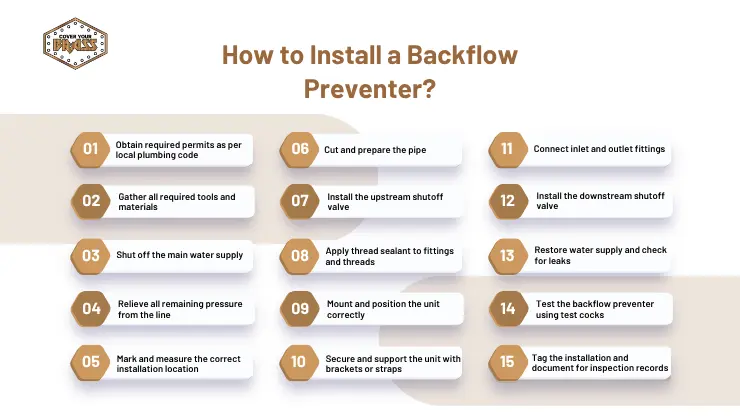
Installing backflow preventers includes locating the connection point, preparing the pipe, assembling the device, installing it correctly, and testing the system. A licensed plumber selects the appropriate device, such as an RPZ, DCVA, or PVB, based on the hazard level, places them at the main water line or cross-connection, and installs them above ground at least 12 inches above grade where required. They shut off the water supply, cut and prepare the pipe, ensure correct flow direction and clearance, and connect shut-off valves and test cocks for inspection and maintenance. This approach supports code compliance, routine testing, and proper backflow preventer installation to protect potable water systems from contamination.
How to Choose the Right Backflow Preventer?

Choosing the right backflow preventer requires evaluating hazard level, type of backflow risk, application area, pipe size, installation location, compliance requirements, and maintenance needs to ensure effective contamination prevention and system compatibility. Each factor determines the appropriate device type, such as RPZ for high-risk systems or DCVA for low-risk applications, ensuring proper protection of the potable water supply.
Steps to Choose the Right Backflow Preventer:
Assess Your Hazard Level
Selecting the right backflow preventer starts with assessing the hazard level, which defines contamination risk based on the type of fluid connected to the system. High-hazard systems involving toxic substances require advanced devices such as an RPZ assembly, whereas low-hazard systems with non-toxic fluids may require only a DCVA. Getting this right ensures the correct level of protection is in place and regulatory requirements are met.
Know Your Backflow Risk Type
A backflow preventer must be matched to the specific risk type, whether backsiphonage from negative pressure or backpressure from higher downstream pressure. Each condition requires a different mechanical response, making it essential to identify the cause before selecting a device. Vacuum breakers address backsiphonage, while RPZ assemblies are better suited for combined or high-risk scenarios.
Match the Device to Your Application
Different applications place different demands on a backflow preventer, making device-to-application compatibility essential for effective contamination control. Irrigation systems often require PVBs while commercial buildings typically need RPZ assemblies, as each environment presents unique pressure and hazard conditions. The right match ensures reliable performance and compliance with plumbing standards.
Size It to Your Pipe & Water Pressure
Properly sizing a backflow preventer to match pipe diameter and system pressure ensures stable water flow, consistent performance, and reliable response during a backflow event. A correctly sized device aligns with operating conditions and maintains flow efficiency throughout the system. Getting the size right from the start prevents pressure loss, avoids flow restrictions, and eliminates the need for costly adjustments later.
Consider Where It Will Be Installed
The location of the backflow preventer installation directly affects its performance, ease of service, and compliance with local code requirements. Some devices require above-ground placement or specific height clearances to function correctly under pressure conditions. Choosing the right location from the start supports proper operation and simplifies future maintenance.
Check Local Codes & Approved Devices List
A backflow preventer must comply with local codes that specify approved devices, installation requirements, and applicable testing standards. Using an unapproved device or an incorrect installation method can result in failed inspections, fines, or mandatory system changes. Verifying requirements before installation ensures legal compliance and a smooth inspection approval process.
Testable vs. Non-Testable
Whether a backflow preventer is testable or non-testable determines if the system can be inspected, certified, and verified for performance over time. Testable devices such as RPZ assemblies and DCVAs support regular compliance verification, while non-testable options like hose bib vacuum breakers provide basic protection without certification capability. Selecting the right type ensures the system meets both performance expectations and ongoing compliance requirements.
Think About Long-Term Maintenance
The long-term reliability of a backflow preventer depends on factoring in maintenance requirements before installation, including inspection frequency, part replacement, and service accessibility. Some devices require routine testing and component servicing to maintain consistent protection, while others operate with minimal intervention. Planning for maintenance from the outset extends the device's lifespan and ensures uninterrupted protection of the water system.
How Much Does a Backflow Preventer Cost?
Backflow preventer cost ranges from $40 to $4,000+ for the device and $130 to $1,200 for installation, depending on type, size, and system complexity. Basic devices such as hose bib backflow preventers cost $7 to $37, and atmospheric vacuum breakers range from $13 to $170, while double check valve assemblies (DCVA) cost $200 to $3,000, and reduced pressure zone (RPZ) devices range from $1,000 to $3,500.
Residential backflow preventer installation costs range from $300 to $2,500, while commercial installations range from $1,000 to $3,500, depending on labor and site conditions. This backflow preventer installation cost reflects the level of protection provided, ensures compliance with plumbing codes, and helps avoid health risks, fines, and costly water system damage.
What Are the Common Backflow Preventer Problems?
Common backflow preventer problems include fouling from debris buildup, worn seals, leaking relief valves, freezing damage, and failed pressure tests. These issues result from sediment accumulation, pressure fluctuations, temperature changes, or lack of maintenance, which reduce performance and increase the risk of leaks and contamination if not addressed through regular inspection and repair.
5 most common backflow preventer problems include:
Fouling or Debris Buildup: Buildup of dirt and sediment inside the device blocks internal parts and prevents proper valve sealing.
Worn or Damaged Seals and Rubber Seats: Seals lose elasticity over time, making it difficult to stop reverse water flow.
Leaking or Dripping from Relief Valve: The relief valve releases water due to pressure imbalance or faulty internal components.
Freezing and Physical Damage: Freezing water or external impacts can crack the device and damage internal parts.
Failed Annual Test or Pressure Drop: The device fails performance tests due to internal wear or restricted flow.
Fouling or Debris Buildup
Fouling occurs when dirt, sediment, rust, or mineral deposits accumulate inside the backflow preventer around check valves and internal components, restricting valve movement and preventing proper sealing. Left unaddressed, this leads to partial backflow, pressure loss, or device failure during operation. Flush the system periodically and install upstream strainers or filters to prevent debris entry and maintain smooth valve performance.
Worn or Damaged Seals and Rubber Seats
Backflow preventers' seals and rubber seats degrade over time due to continuous pressure, friction, and exposure to chemicals or temperature extremes, causing them to lose elasticity and fail to maintain a tight seal against reverse flow. This reduces check valve effectiveness and compromises the device's ability to prevent contamination. Inspect seals during routine maintenance and replace worn components promptly to maintain proper sealing and device performance.
Leaking or Dripping from Relief Valve
Relief valve leakage occurs in a backflow preventer when internal pressure falls below the required threshold or when components fail to seal properly due to debris, worn seals, or a pressure imbalance within the assembly. Continuous dripping may indicate active discharge or internal malfunction requiring immediate attention. Clean internal components, check pressure levels, and repair or replace faulty parts to stop unnecessary discharge and restore proper function.
Freezing and Physical Damage
Water inside the backflow preventer expands when temperatures drop below freezing, cracking the device body or internal components. At the same time, physical damage can also result from impacts, improper installation, or missing insulation. Cracked housings and damaged valves cause leaks and complete device failure, particularly in outdoor installations. Insulate the device, install protective enclosures, and drain water before freezing conditions to prevent structural damage.
Failed Annual Test or Pressure Drop
A backflow preventer fails annual testing when it does not meet required pressure-differential or valve-performance standards due to internal wear, debris buildup, or malfunctioning check valves. A pressure drop across the device signals restricted flow or internal failure, reducing system efficiency and compromising water safety. Conduct regular certified testing and repair or replace faulty components to ensure ongoing compliance and optimal performance.
How Do You Maintain a Backflow Preventer?

Maintaining a backflow preventer involves regular inspection, annual testing by certified professionals, cleaning internal components, checking for leaks, insulating against freezing, and replacing worn parts to ensure proper operation and contamination prevention. Consistent maintenance of the backflow preventer prevents device failure, maintains pressure integrity, ensures regulatory compliance, and extends the lifespan of the backflow prevention system.
Follow these 7 methods to maintain a backflow preventer:
Schedule Annual Professional Inspection
An annual professional inspection ensures a backflow preventer operates within required pressure limits by having certified backflow technicians test check valves, relief valves, and pressure zones with calibrated equipment. Early detection of internal wear, pressure imbalances, or component failures prevents system breakdown and ensures regulatory compliance and reliable protection of the water supply.
Check Regularly for Leaks and Drips
Visually inspecting the backflow preventer for drips from joints, valves, or the relief outlet helps identify worn seals, debris interference, or pressure irregularities before they escalate. Early detection prevents water loss, reduces repair costs, and keeps contamination prevention consistently in place.
Keep the Surrounding Area Clean and Clear
Keeping the area around the backflow preventer free of dirt, debris, and obstructions ensures that relief valves discharge properly and that backflow technicians can access the device for testing without restrictions. A clean environment reduces the risk of debris entry and supports consistent device performance and easier maintenance.
Insulate the Unit Before Winter
Covering the backflow preventer with foam pipe insulation, insulated jackets, or protective enclosures prevents water inside the device from expanding in low temperatures and cracking valves or the device body. Proper insulation ensures continued operation through cold conditions and prevents costly freeze damage.
Flush the Valve Periodically to Clear Sediment
Periodically flushing the backflow preventer by opening test cocks or valves removes accumulated sediment and debris that would otherwise restrict valve movement and reduce sealing efficiency. Clean internal pathways maintain smooth valve operation, improve flow performance, and reduce the risk of fouling over time.
Replace Worn Seals and Components Promptly
Inspecting and replacing worn seals, rubber seats, and internal parts of the backflow preventer as soon as degradation is detected restores proper sealing and prevents leakage or reverse flow caused by continuous pressure exposure. Timely replacement maintains device reliability, prevents contamination, and avoids the risk of major system failure.
Keep Records of All Inspections and Repairs
Maintaining documented records of inspection results, repairs, test reports, and maintenance activities provides a reliable history of each backflow preventer's performance and compliance status. Accurate documentation supports regulatory audits, improves maintenance planning, and provides verified proof of system safety over time.
How is Backflow Preventer Testing Performed?
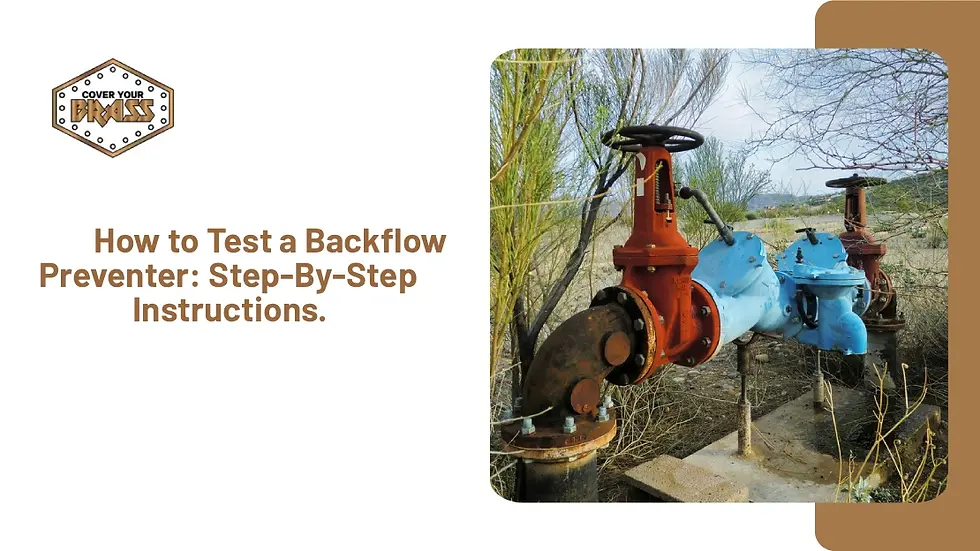
A certified backflow technician performs backflow preventer testing by shutting off the downstream supply, attaching calibrated differential pressure gauges to the test cocks, and measuring pressure differentials across each check valve and relief valve to verify they meet required thresholds. The backflow tester simulates backpressure and backsiphonage conditions to confirm that internal valves close correctly, the relief valve activates at the proper pressure, and no reverse flow or leakage occurs. Once backflow preventer testing is complete, results are documented and submitted to the local water authority as verified proof of device performance and code compliance.
Comments